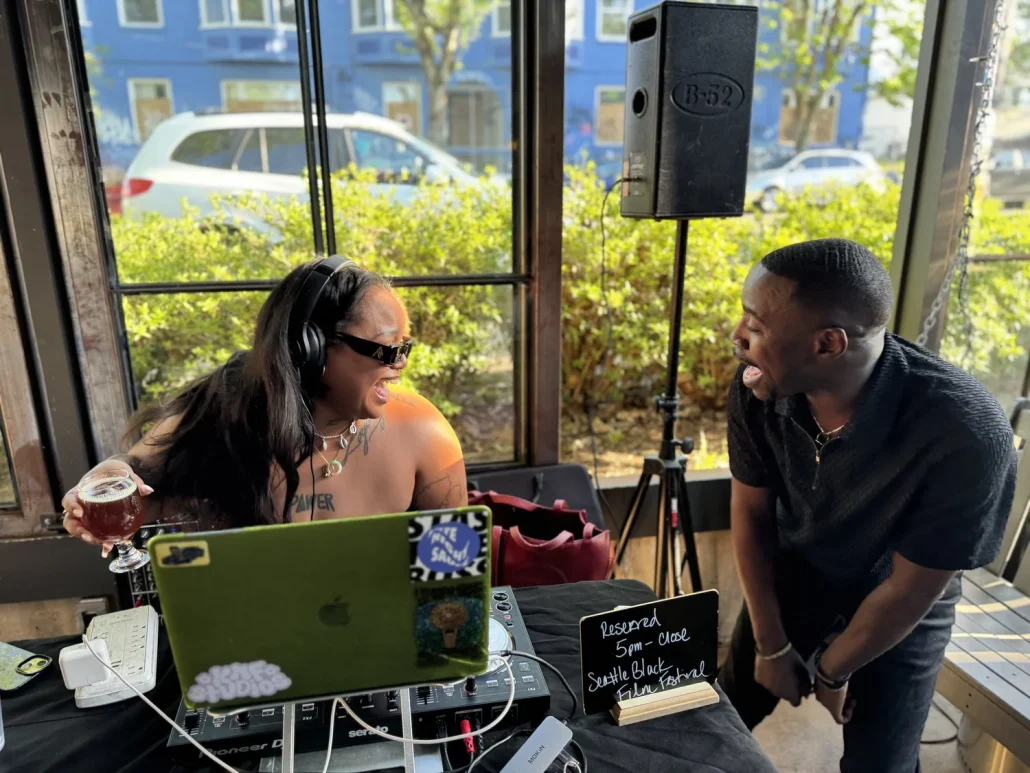
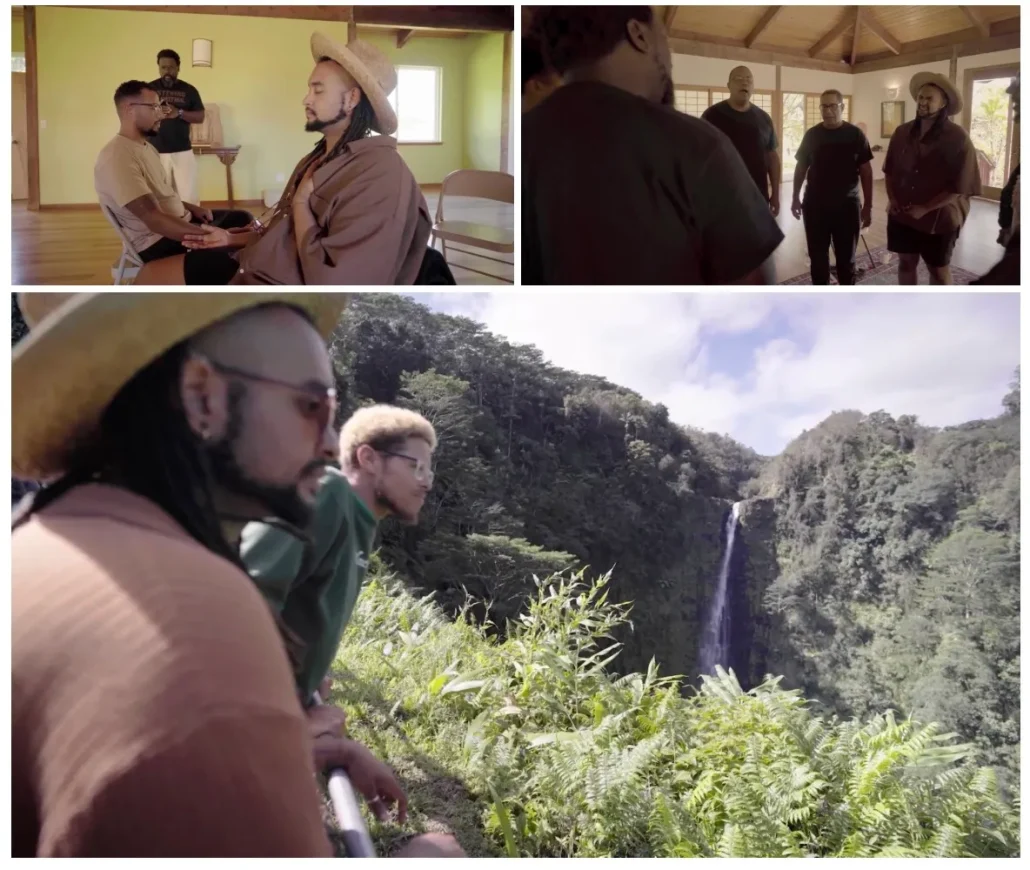
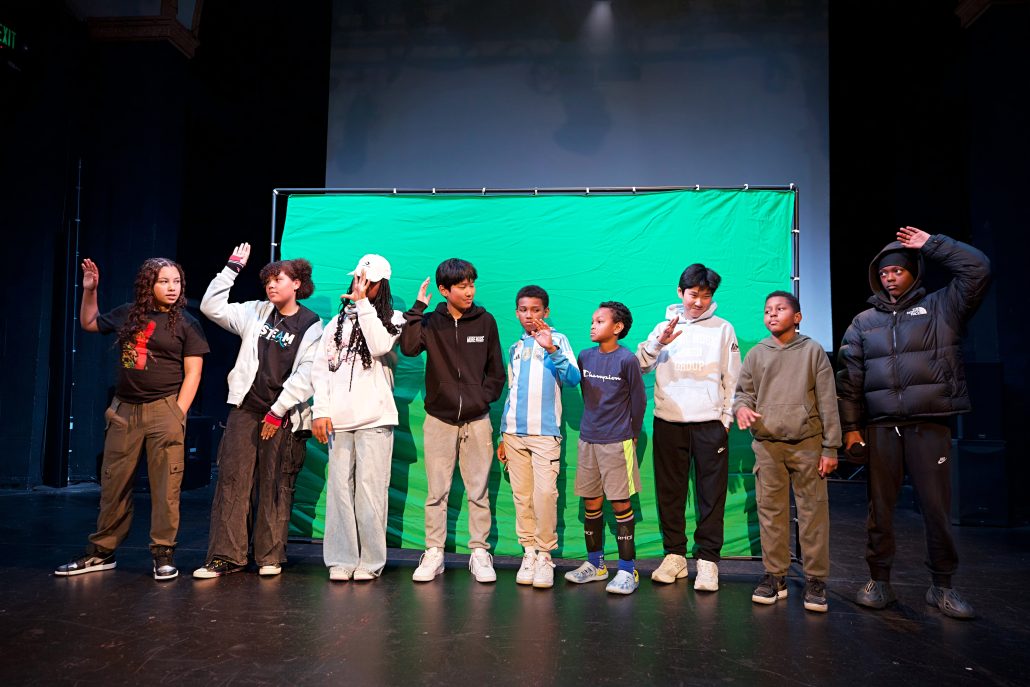
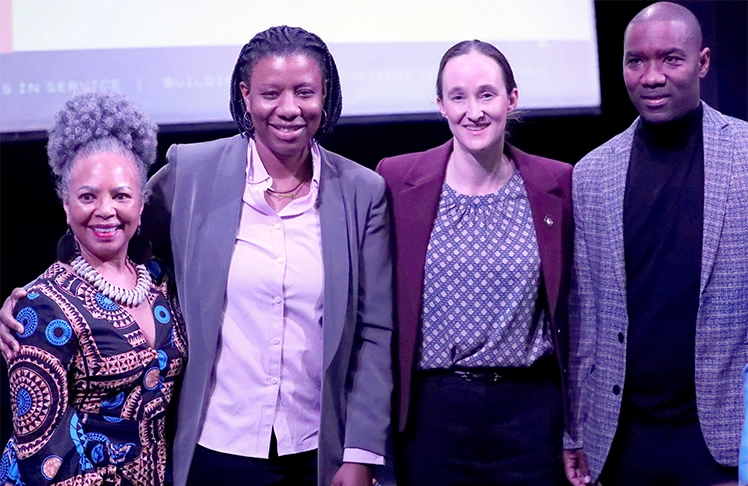
LANGSTON is a 501(c)(3) non-profit arts organization, founded in 2016 with the purpose of spearheading programs at the historic Langston Hughes Performing Arts Institute. We lead innovative programs and foster community partnerships that center Black art, artists, and audiences while honoring the enduring legacy of Seattle’s Black Central Area.


Mission, Vision, and Values
Our wide-ranging programs span multiple disciplines, all firmly rooted in our unwavering mission and values.
Our Mission
To strengthen and advance our community through Black arts and culture.
Our Vision
Cultivating Black Brilliance
Our Values include
Sharing culture,
Promoting artistic expression,
Encouraging artistic excellence,
Facilitating cultural education and possibility,
Cultivating leaders,
Practicing radical inclusivity,
Thriving as a self-determined community
These principles serve as the guiding light for our diverse range of programs, initiatives, and partnerships. At LANGSTON, we are dedicated to creating a future where arts and culture play an integral role in building a stronger, more vibrant, and more united community.
Langston Hughes

Langston Hughes (1901 -1967) was a Black poet, novelist, playwright, and columnist. A key figure in the Harlem Renaissance, he gained attention after his first poem, “The Negro Speaks of Rivers,“ was published in The Crisis Magazine in 1921. His work centers on the 20th-century Black experience, with notable poems such as “Dreams,” “I, Too,” and “Harlem” contributing to his activism.
Hughes was a pioneer in utilizing jazz rhythms and dialect in his works, incorporating elements such as improvisational phrasing and repetition from the genre into his prose. He also wrote two autobiographies, short stories, children’s books, and a weekly column starring fictional character Jesse B. “Simple” Semple in the Chicago Defender.
Langston Hughes and Seattle
On May 26, 1932, Langston Hughes first spoke in Seattle, Washington, at the First AME Church for an author program. He was awarded a Guggenheim fellowship three years later. On January 24, 1946, he delivered the public lecture, “Color Around the World,” presented by the Associated Women Students of the University of Washington.
LHPAI

The Langston Hughes Performing Arts Institute (LHPAI), although it served different audiences decades ago, always centered the community.
Beginnings
The Chevra Bikur Cholim constructed the building in 1915 as an orthodox Jewish Synagogue. The congregation sold the building to the City of Seattle in 1969, after Walter R. Hundley’s efforts to transform it into a community center.
During this time, Hundley recruited John Jeffrey Tucker to work with Model Cities. At the request of supervisor Judge Charles Johnson, Tucker developed a program for youth in the city. Taking the opportunity with the synagogue, Tucker established a theatrical arts program, laying the foundation for LHPAI.
In 1972, the synagogue was renamed the Yesler-Atlantic Community Center and managed by Seattle’s Parks and Recreation department. The center served as a hub for community activities involving artists, churches, and local groups. The Black Consciousness movement of the 1960s and 1970s prompted conversation about a new name that reflected the Central District’s Black heritage. Ms. J.T. Stewart, chair of the advisory board, proposed the name Langston Hughes Cultural Center.

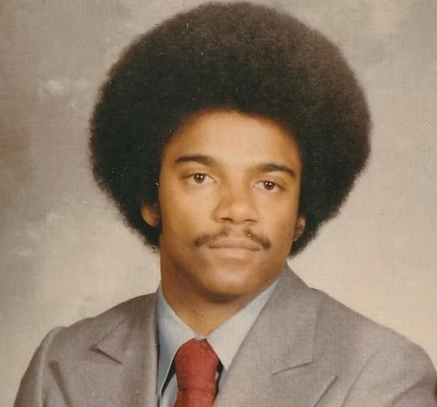

In Order: Walter R. Hudley, John Jeffrey Tucker, J.T. Stewart
Community Commitment
In 1974, the building became the Langston Hughes Cultural Arts Center (LHCAC). The LHCAC, similarly to LANGSTON, was committed to making arts and culture from across the African diaspora accessible to the community. The center supported these efforts through offering rehearsal and performance spaces, along with class and workshop opportunities, such as karate, break dancing, and the All-Teen Summer Musical.
LHCAC also became a space where community members explored creative ways to address local and international social issues through art. Projects included Madronna Youth Theater’s 1989 anti-drug, anti-gang play Peer Pressure, and the 1995 film What Could Have Been, an anti-youth-violence project, both written by James Lollie.
Later Years
The 21st century marked a transition period. In 2001, the center was renamed the Langston Hughes Performing Arts Center (LHPAC) and reorganized by the Parks department. From 2010 to 2012, then-Executive Director Royal Alley-Barnes led a two-year renovation project for the building. Then, in 2013, the building’s management transferred to the City of Seattle Office of Arts and Culture, and the building received its current title: Langston Hughes Performing Arts Institute (LHPAI).
LANGSTON is the realization of a community-led vision. Dedicated community members conceived and designed it to serve as a steadfast steward for this vital Black arts and cultural hub in Seattle. Our journey reflects the recommendations of our community, gathered through a three-year stakeholder engagement process led by the Seattle Office of Arts & Culture. They remain our close partner and a major sponsor to this day, guiding us in our commitment to strengthening and celebrating our community through the transformative power of Black arts and culture.
Land & Labor Acknowledgement
We at LANGSTON acknowledge with respect the Indigenous peoples upon whose ancestral lands we gather, create, work to serve the community, and share our art. We recognize that this land sits on the traditional territory of the Muckleshoot, Duwamish, Suquamish, Cayuse, Umatilla, and Walla Walla, who have stewarded this land throughout generations. We honor their enduring presence, resilience, and irreplaceable contributions to our community.
Furthermore, we acknowledge the labor and sacrifices of our ancestors, particularly those of African descent, whose resilience, creativity, and perseverance laid the foundation for our organization. Their struggles and triumphs continue to inspire us as we strive to amplify Black voices and perspectives through our art. We also recognize and honor the labor being done today to create new futures for our community.
With Additional Support From